
Long before modern borders split the region, the Bay of Bengal served as a vibrant trade highway connecting South India with Southeast Asia through co…
 1/7
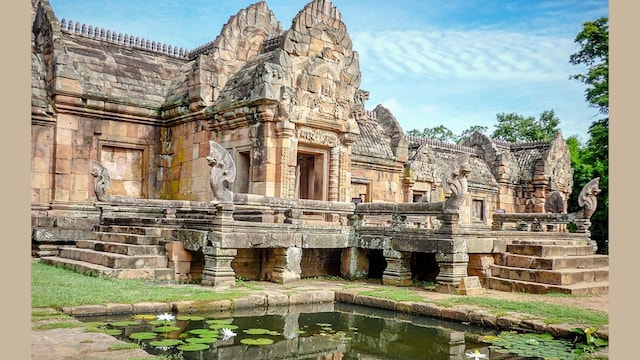
1/7Prasat Phanom Rung, Buriram, Thailand | Perched on the rim of an extinct volcano overlooking the Mun River basin, this pink sandstone and laterite sanctuary was built between the 10th and 13th centuries. Dedicated to Shiva, the complex is engineered so the rising sun aligns through 15 consecutive sanctuary portals four times a year. Its pediments display narrative bas-reliefs of Nataraja and a reclining Vishnu (Phra Narai), exemplifying classical Khmer adaptation of Indic cosmological iconography. (Image source: Wikimedia Commons)
 2/7
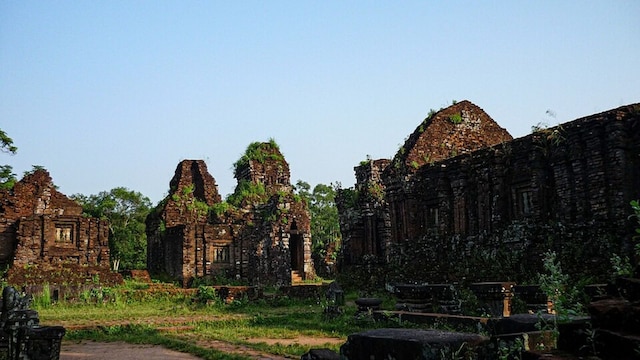
2/7My Son Sanctuary, Quang Nam, Vietnam | Inscribed as a UNESCO World Heritage Site in 1999, this valley complex served as the spiritual and political heart of the Champa kingdom between the 4th and 14th centuries. Constructed using red fired brick joined without mortar along the Thu Bon River basin, its tower-shrines (kalan) honour Shiva under the royal title Bhadresvara. The site’s Sanskrit and Cham inscriptions document centuries of oceanic contact and patronage tied to maritime trading routes across the South China Sea. (Image source: Wikimedia Commons)
 3/7
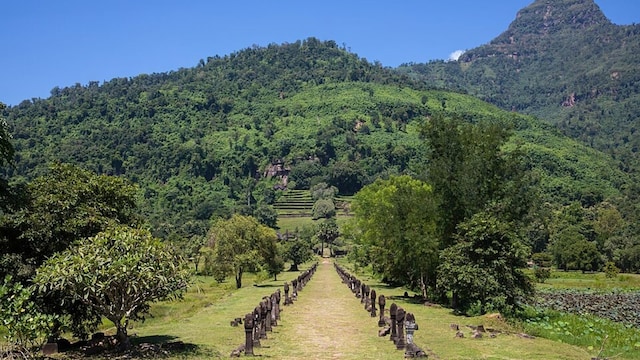
3/7Wat Phu, Champasak, Laos | Inscribed as a UNESCO World Heritage Site in 2001, this sanctuary complex stands at the foot of Mount Phu Kao overlooking the Mekong River. Developed from the 5th century onwards and integrated into the Khmer Empire between the 11th and 13th centuries, the site was chosen because the natural mountain peak resembles a Shiva lingam. Stone staircases, ceremonial causeways, and yoni pedestals illustrate early Indic cosmological planning adapted to local riverine geography. (Image source: Wikimedia Commons)
 4/7
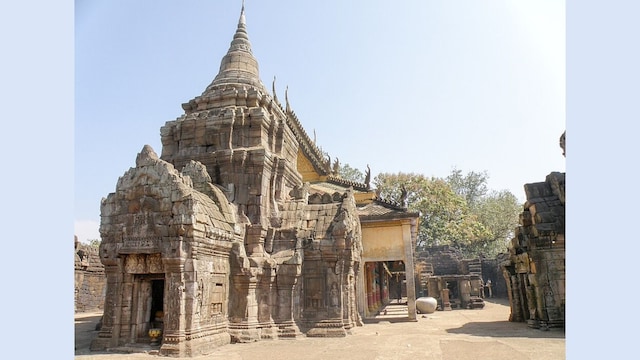
4/7Vat Nokor Bachey, Kampong Cham, Cambodia | Situated along the banks of the Mekong River, this 11th-century sandstone and laterite sanctuary was established as a Brahmanical shrine before transitioning into an active Theravada Buddhist monastery in the 15th century. Its central tower preserves original Hindu stone lintels illustrating narrative episodes such as the Churning of the Ocean of Milk alongside guardian dvarapalas, showing the layered religious evolution along Cambodia’s interior waterways. (Image source: Wikimedia Commons)
 5/7
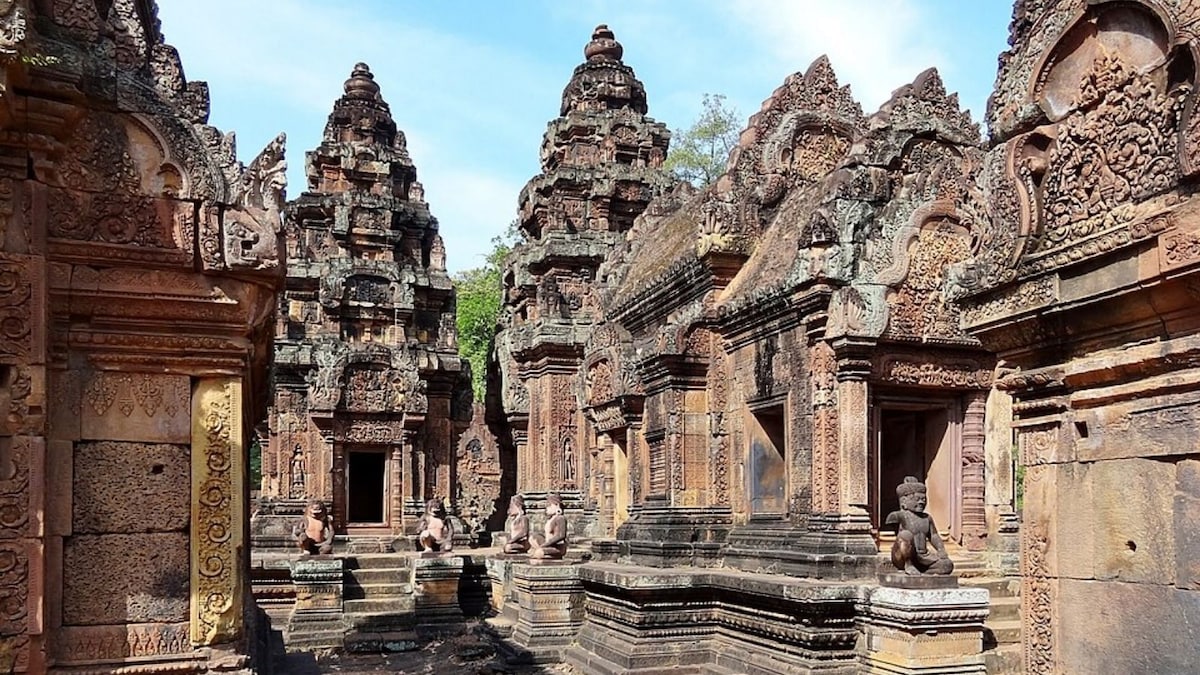
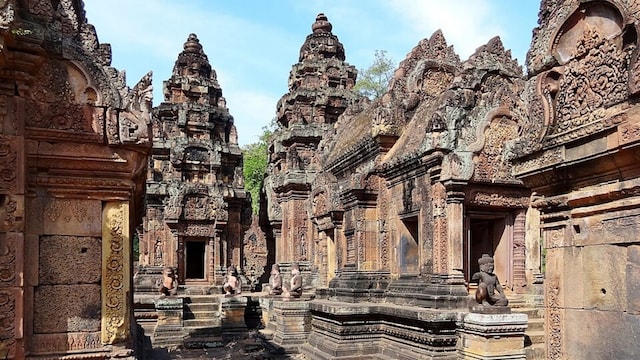
5/7Banteay Srei, Siem Reap, Cambodia | Inscribed as a UNESCO World Heritage Site in 1992 as part of Angkor, this 10th-century temple was consecrated in 967 CE by the royal Brahmin scholar Yajnavaraha. Built from fine-grained pink sandstone that allowed deep, three-dimensional bas-relief carving, the complex honours Shiva and Vishnu. Its pediments depict scenes from the Ramayana and Mahabharata with a level of decorative precision that parallels contemporary rock-cut traditions across the Bay of Bengal. (Image source: Wikimedia Commons)
 6/7
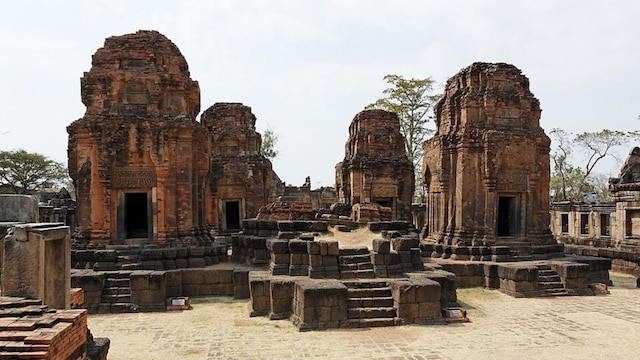
6/7Muang Tam, Buriram, Thailand | Located on the plain below Phanom Rung near the Cambodian border, this 10th-to-11th-century Shaivite complex features five brick towers arranged on a single laterite platform. The central layout is enclosed by four L-shaped stone pools bordered by five-headed naga balustrades. Serving as an administrative and spiritual centre on the ancient road to Angkor, its lintels depict Shiva and Uma atop the bull Nandi, exemplifying the classical Khmer adaptation of Indic iconography. (Image source: Wikimedia Commons)
 7/7
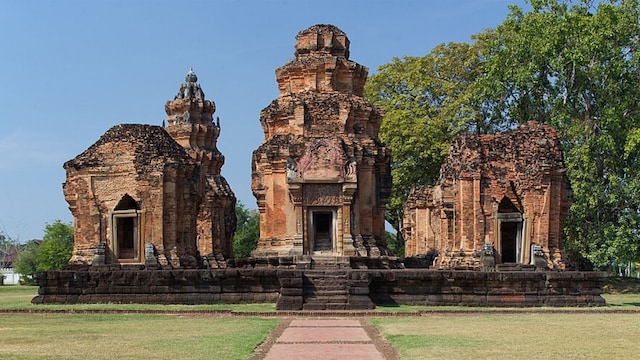
7/7Prasat Sikhoraphum, Surin, Thailand | Constructed in the 12th century along a tributary of the Mun River, this complex consists of five brick-and-sandstone towers set on a laterite base. The central tower houses an intact sandstone lintel depicting a ten-armed dancing Shiva surrounded by Brahma, Vishnu, Ganesha, and Parvati. The site shows how Shaivite liturgical art was executed in frontier settlements supporting regional trade networks. (Image source: Wikimedia Commons)