
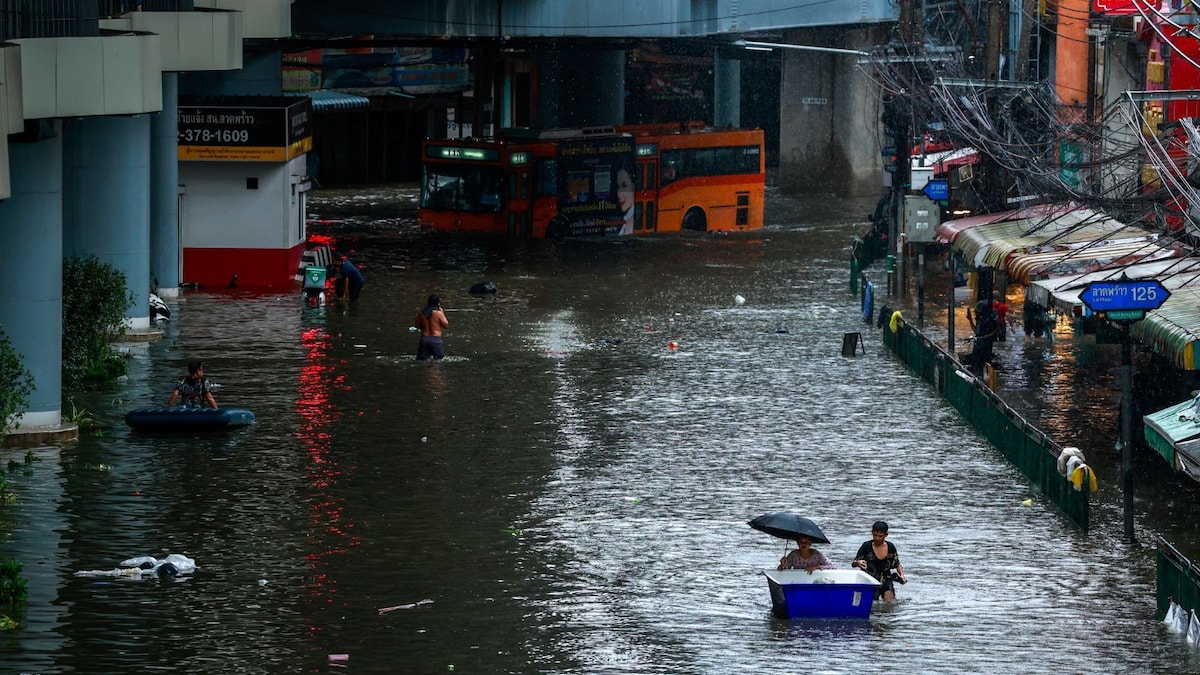
According to the official data, around 320 millimetres of rain fell across the capital in a two-to-three-day burst—nearly matching the entire average rainfall typically recorded for the month of September. Local authorities confirmed that the deluge affected roughly 700,000 residents across more than 329,000 households and forced nearly 6,000 people to evacuate to emergency shelters.
Nationwide, about 40 deaths have been tied to flood-related incidents, primarily from drowning and accidental electrocutions, ‘The Guardian’ reported, citing government officials.
Despite the severe disruption, municipal drainage efforts have begun lowering water levels across central districts. For prospective travellers, the Tourism Authority of Thailand (TAT) has indicated that key tourist corridors remain open, though significant operational disruptions persist across aviation and surface transit.
Also Read: Why Japan is an introvert’s dream escape
Is It Safe To Visit Bangkok Right Now?
The Tourism Authority of Thailand (TAT) confirmed that the capital’s central commercial, dining, and heritage hubs remain accessible.
Major cultural attractions—including the Grand Palace, the Temple of the Emerald Buddha, Wat Pho, and Wat Arun—continue normal operations. Key retail and lifestyle areas, such as Siam, Ratchaprasong, Chinatown’s Yaowarat Road, Talat Noi, and Song Wat, are largely running standard daily business. Remaining standing water in central areas could largely clear within the next few days, assuming there’s no further heavy downpour.
However, conditions remain significantly more challenging across low-lying eastern districts, including Lat Krabang, Bang Kapi, Min Buri, and Saphan Sung, where canals exceeded capacity and drainage has taken longer. Travellers with hotel reservations outside central tourist zones are advised to verify access directly with their accommodation.
Flights and Baggage Disruptions at Suvarnabhumi
Both Suvarnabhumi Airport (BKK) and Don Mueang International Airport (DMK) remain open, but Suvarnabhumi continues to face ground-handling delays.
Thai Airways announced it has temporarily reduced scheduled departures from Bangkok by approximately 30 to 40 % as it works to stabilise operations. Severe local flooding prevented ground workers from reporting for duty, resulting in a backlog of more than 5,000 pieces of luggage and prompting dozens of domestic and international flight cancellations, including routes connecting to London, Frankfurt, Singapore, Tokyo, Sydney, and Phuket.
Also Read: The seven most beautiful train stations in the world | In pictures
What Is the Status of Public Transport?
According to a report by Condé Nast Traveller, Bangkok’s urban rail networks are operating normally:
– BTS Skytrain & MRT: Both elevated and underground networks are fully functional, providing reliable transport that bypasses street-level flooding.
– Airport Rail Link: The Airport Rail Link serving Suvarnabhumi Airport and the SRT Red Line serving Don Mueang are running on standard schedules.
– Surface Roads & Taxis: Road transit remains unpredictable. Authorities noted that water depths of 10 to 30 centimetres have lingered on secondary roads, causing gridlock and localised diversions even as primary arteries drain.
– Intercity Rail: Intercity rail services remain subject to route inspections and schedule adjustments, particularly along lines traversing flooded northern and central provinces.
Weather Forecast
The Thai Meteorological Department reported that the southwest monsoon system is weakening, forecasting reduced rainfall and daytime highs between 33°C and 35°C, with conditions shifting toward isolated thunderstorms. The weather agency noted that another shift in atmospheric conditions could bring additional thunderstorms and gusty winds early next week.
Elsewhere in the country, the Tourism Authority confirmed that southern resort islands—including Phuket, Krabi, Phang Nga, Koh Samui, Koh Phangan, and Koh Tao—remain accessible and outside the flood impact zone.
Advice for Travellers
Foreign governments, including the UK Foreign Office, have not issued blanket travel advisories against visiting Bangkok.
Visitors currently in Bangkok are advised to rely on rail transit over taxis, pack essential clothing and medications in carry-on bags to mitigate luggage handling delays, and avoid walking through stagnant water due to hidden road damage and open drains.
Also Read: International destinations you can explore with IRCTC tour packages