
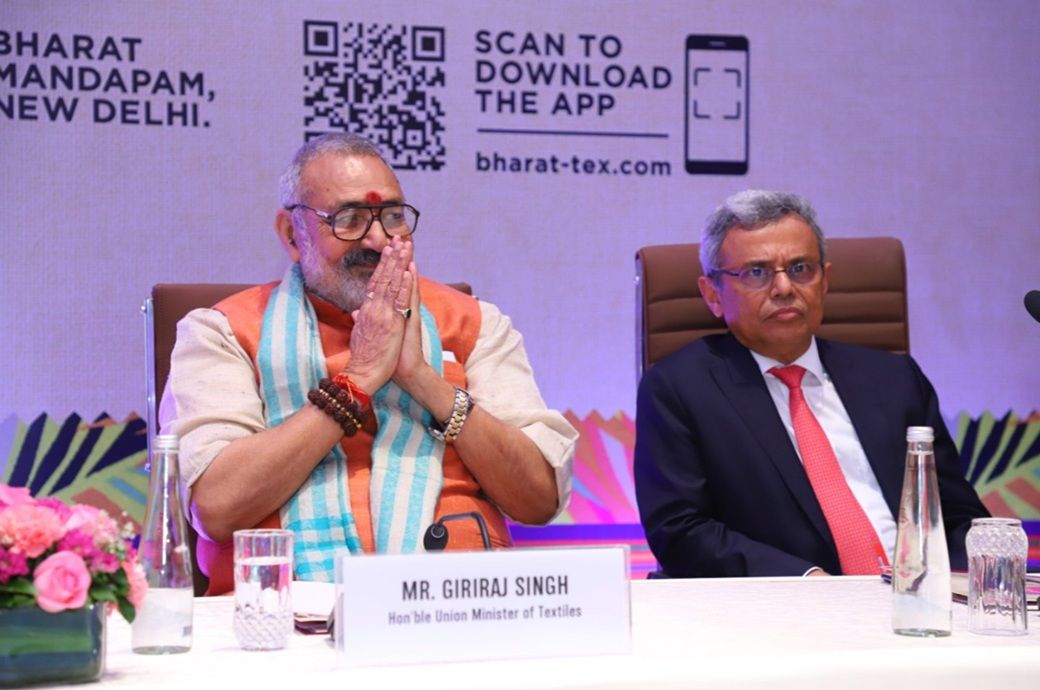
The session, titled Indian Brands, Global Ambitions: Redefining Retail Growth Beyond Borders, brought together designers, entrepreneurs, e-commerce platforms and manufacturers to discuss how Indian textile and lifestyle brands can scale for global markets while staying rooted in craft and heritage.
Indian textile and apparel brands discussed international scaling at Bharat Tex 2026, with export performance and 2030 targets framing the opportunity.
The session focused on converting manufacturing strength into design-led, culturally distinctive retail growth.
Quality, sustainability, traceability, craft heritage and omnichannel reach emerged as priorities for global competitiveness.
The session held yesterday featured more than 20 panellists, including representatives from PDS Limited, Welspun World, Neytt Homes, Pashmina, ExpoBazaar and Trident. Export performance, 2030 growth targets and an expanding network of free trade agreements (FTAs) framed the discussion on international expansion, the Ministry of Textiles said in a press release.
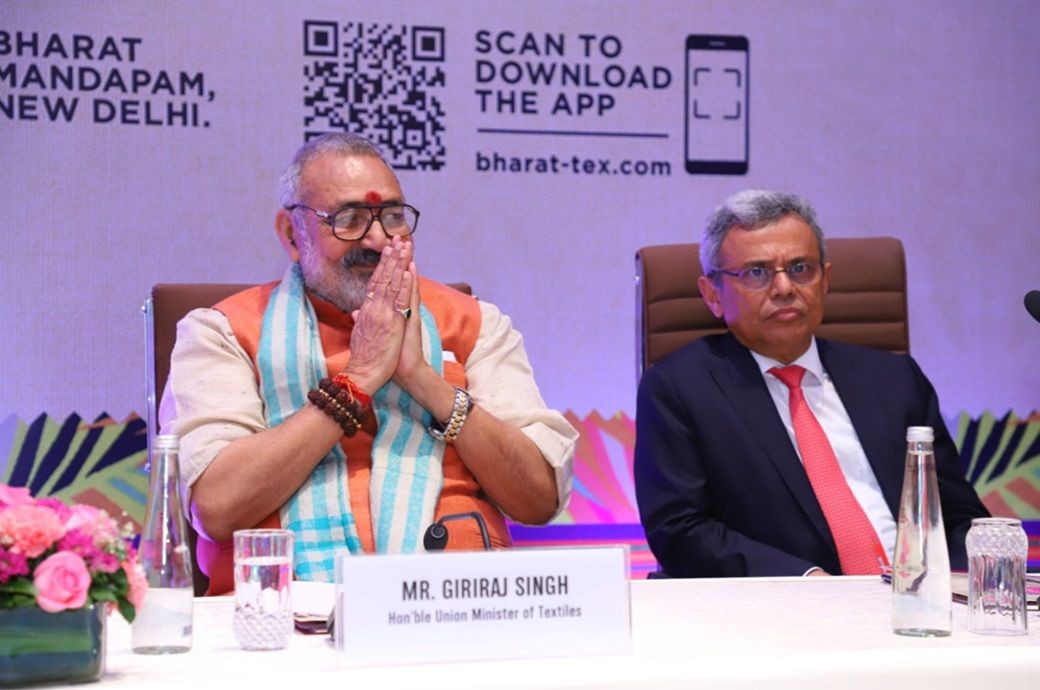
Minister of Textiles, Giriraj Singh said Indian artisans, designers and micro, small and medium enterprises (MSMEs) have significant potential to build globally trusted brands while preserving India’s craftsmanship, textile heritage and cultural legacy. He added: “Artisans Bharat ki punji hain (Artisans are India’s treasure)”, underlining the role of artisans and weavers in the textile ecosystem.
Singh emphasised quality, sustainability and traceability, alongside scale, as priorities for Indian brands seeking global markets. He said platforms such as Bharat Tex 2026 can help showcase craftsmanship, connect artisans with international buyers and create sustainable livelihood opportunities while preserving textile heritage.
Vaishali Shadangule, designer said her initiative began with four weaving families and has grown into a community where over 90 per cent of the weavers are young women. She said: “If you want to capture the global market, you have to showcase the strengths of Indian weaves.” Nand Kishore Chaudhary, founder, Jaipur Rugs said authentic storytelling is a brand’s strongest defence, with deeper roots making a brand harder to replicate.
Rahul Mishra, designer said: “Focus on remaining true to Indian craftsmanship rather than altering designs to suit every geography, noting that authenticity itself is a source of differentiation”. He added that handmade crafts and handlooms are where the soul of India is, especially in the age of AI.
E-commerce leaders identified marketplaces and omnichannel strategies as central to global expansion, noting that scale takes time but can support long-term sustainability.
Srinidhi Kalvapudi, country head, Amazon Global Selling said the platform supports more than 200,000 sellers, including artisans from tier-two and tier-three cities. Kalvapudi said: “India should not only export more but also be remembered more,” adding that “building brands is no longer optional; it is existential.”
For exporters, manufacturers and sourcing teams, the discussion points to an international growth agenda built on stronger brand identities, craft-linked differentiation, omnichannel reach, and readiness for evolving consumer and regulatory requirements.
Fibre2Fashion News Desk