

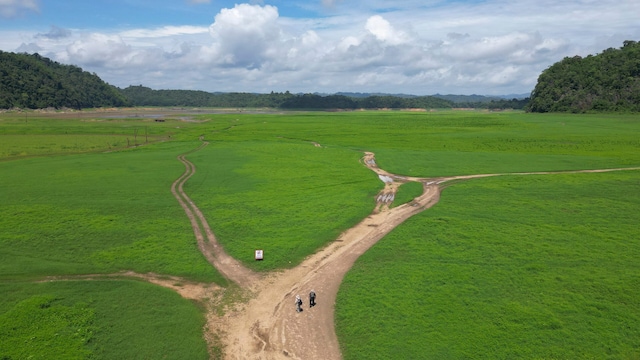
Maintenance at Vajiralongkorn Dam drained the hydropower facility’s reservoir, revealing Nithe Station for the first time in more than 40 years.

 1/5
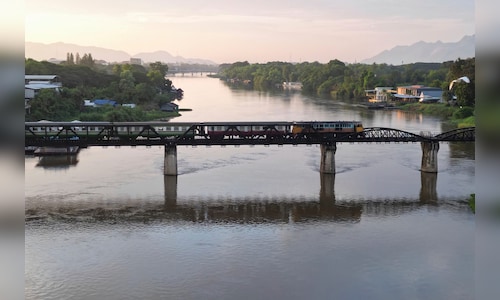
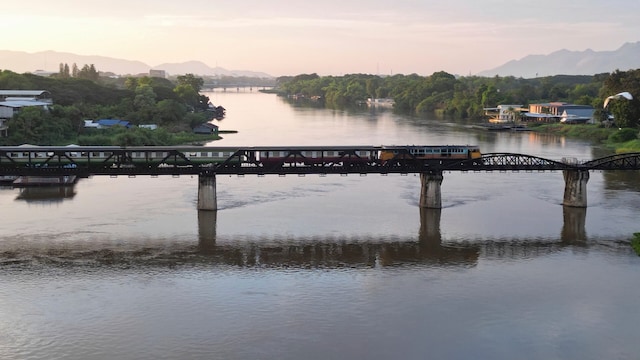
1/5Researchers are racing to survey the site, which was a major depot on the historic 415-kilometer (257-mile) route that connected then Siam and Burma, modern day Thailand and Myanmar. But it is a race against time, as the completion of the dam’s maintenance in August and Southeast Asia’s rainy season may soon reflood the area. A train crosses the River Kwai Bridge, one of the most inconic sections of the infamous World War II “Death Railway,” in Kanchanaburi, Thailand, Sunday, May 31, 2026. (AP Photo/Anton L. Delgado)
 2/5
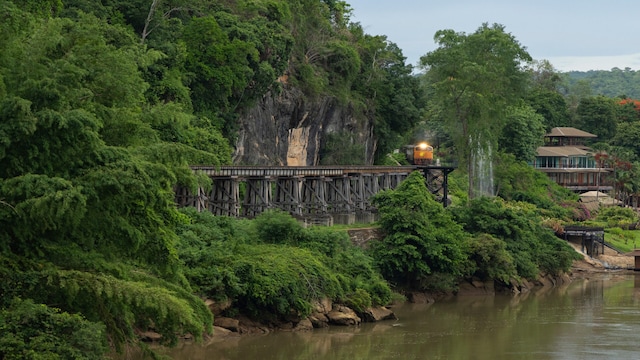
2/5During World War II, around 60,000 Allied prisoners of war, as well as hundreds of thousands of Asian laborers, were forced to build the railway by the Empire of Japan. More than 12,500 of the POWs and 75,000 laborers died during construction, inspiring “The Death Railway” nickname. A train approaches Thamkra Sae Station, one of the still active sections of the infamous World War II “Death Railway,” in Sai Yok, Thailand, Thursday, May 28, 2026. (AP Photo/Anton L. Delgado)
 3/5
3/5“We deal with a lot of relatives of POWs. Some of those POWs worked in the area we’re talking about, up at Nithe, and it’s a good opportunity for us to do some surveying… so that we can show relatives in the future,” said Andrew Snow, a researcher at the Thailand-Burma Railway Centre, whose father was captured in Singapore in 1942 and forced to work on the railway. Researchers walk into the empty reservoir where Nithe Station, a depot on World War II’s infamous “Death Railway” resurfaced after the reservoir was drained in Sangkhlaburi, Thailand on Friday, May 29, 2026. (AP Photo/Anton L. Delgado)
 4/5
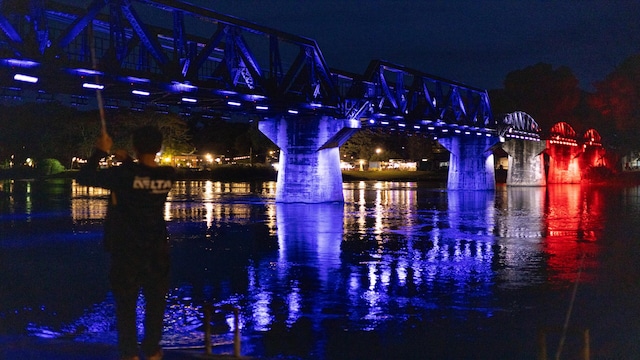
4/5Martyn Fryer, an independent researcher who has visited Nithe three times, flew from Australia to see the fully resurfaced site. His grandfather died as a POW building the railway, and he said he wanted to see for himself “what infrastructure is lying under the water.” Sections of the historic railway are still active, transporting locals and drawing thousands of tourists. Educational sites, like The Hellfire Pass Interpretive Centre, are also designed to keep the history of the railway alive. A man fishes in front of the River Kwai Bridge, one of the most iconic sections of the infamous World War II “Death Railway,” as the bridge is lit up in the colors of the Thai flag in Kanchanaburi City, Thailand, Saturday, May 30, 2026. (AP Photo/Anton L. Delgado)
 5/5
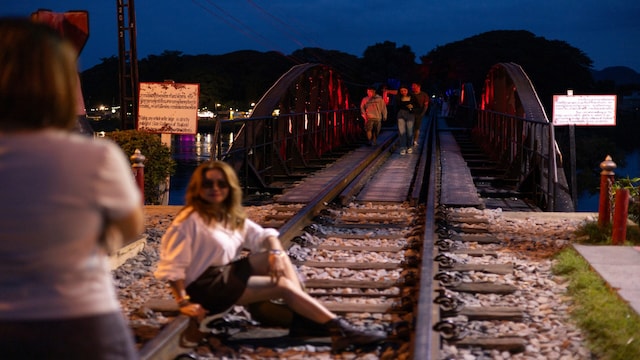
5/5Traveling presents the chance to learn about the people and the culture of the place you’re going, said Michael Weber, a German tourist, at Thamkra Sae Station. “And part of the culture is always the history.” A visitor poses for a photo at the River Kwai Bridge, an iconic part of the infamous World War II “Death Railway,” in Kanchanaburi, Thailand, Saturday, May 30, 2026. (AP Photo/Anton L. Delgado)
Inputs from AP