
After nearly eight consecutive months of decline, the turnaround arrived with surprising force.
Figures made available by the country’s Export Promotion Bureau (EPB), and subsequently cited in multiple media reports, revealed that export earnings jumped 32.92 per cent year-on-year during April. Compared to March, exports reportedly rose 15.2 per cent, adding further momentum to the narrative of recovery.
Bangladesh’s export earnings surged 32.92 per cent year on year in April, crossing the $4 billion mark, with apparel exports rising 31.21 per cent.
However, exporters estimate actual growth at around 8–10 per cent, attributing the jump largely to delayed shipments after Eid disruptions.
Industry stakeholders believe the true export trend will become clearer by July 2026.
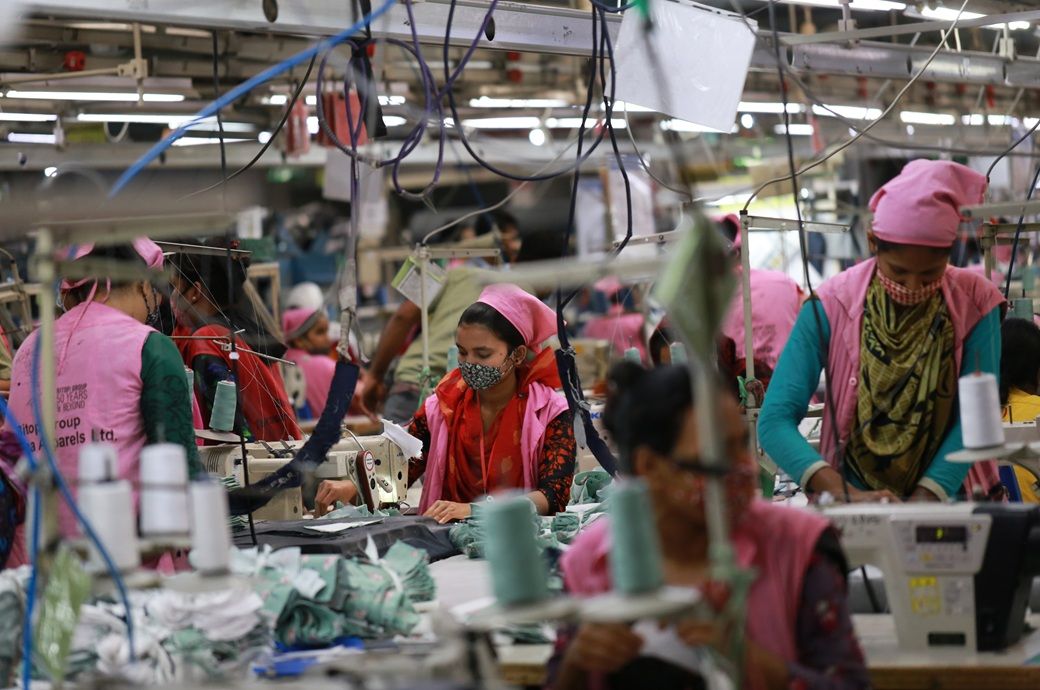
As expected, the readymade garment sector led the charge. In Bangladesh, garments are not simply another export category. They are the lifeblood of the economy, accounting for more than 80 per cent of national export earnings. Unsurprisingly, apparel shipments acted as the main engine of April’s rebound, reportedly increasing 31.21 per cent year-on-year, according to estimates.
At first glance, the figures suggested an industry regaining its footing after months of sluggish global demand, volatile retail markets, and persistent uncertainty across key Western economies.
However, beneath the general optimism, apparel exporters appeared more cautious in their assessment of the situation.
Several exporters believe the actual growth momentum was significantly lower than the headline figure suggests. Their estimates place real export growth closer to 8-10 per cent.
Many of them even held that April receipts largely represented payments for consignments that had actually been shipped in January and February.
A senior representative from an apparel trade body reportedly argued that much of April’s growth stemmed from deferred shipments rather than fresh orders. March exports had suffered because factories remained closed for nearly 10 days during Eid-ul-Fitr, severely affecting production schedules. Consequently, a considerable number of shipments that should have been dispatched in March were instead completed and recorded in April.
The official further added that factories have neither seen a significant spike in fresh orders nor experienced any sudden influx of new buyers, and according to his assessment, the broader demand environment for the industry remained largely stable, without any dramatic shift in market fundamentals.
Industry people thus insist the true health of Bangladesh’s apparel trade may only become visible by July. Temporary fluctuations linked to Eid-related shipment adjustments could continue influencing export numbers through June. Only after those effects fade, they argue, will the industry get a clearer sense of whether April marked the beginning of a durable recovery or merely a temporary statistical spike.
Fibre2Fashion News Desk (DR)