
Achieving this could raise domestic sourcing by 20 per cent, add nearly R 8 billion ($502.36 million) in annual manufacturing output and create up to 34,000 jobs, it said.
South African retailers placed orders for about 250 million units of apparel and footwear with domestic manufacturers in 2019, and by 2024, this had risen to 389 million units, representing 34 per cent of total sourcing among signatories of the government’s Retail-Clothing, Textile, Footwear and Leather (R-CTFL) Masterplan.
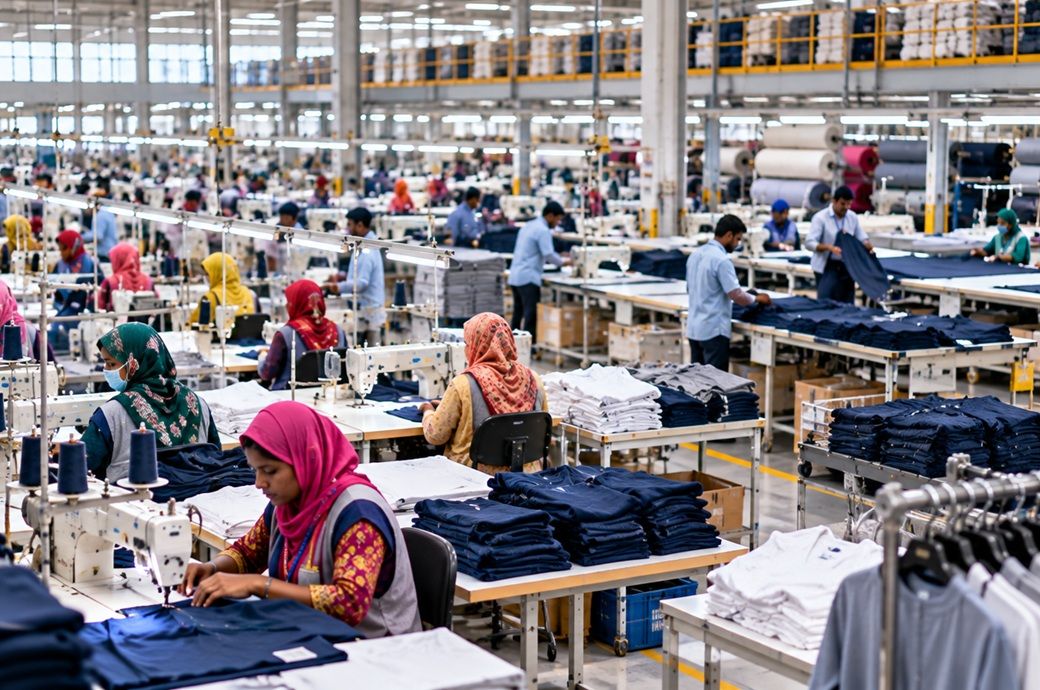
With sound industrial development and policy support, an extra 81 million garments could be sourced by South African retailers every year from domestic manufacturers by 2030, a study said.
This could raise domestic sourcing by 20 per cent, add $502.36 million in annual manufacturing output and create up to 34,000 jobs.
However, it is significantly below the 65-per cent domestic sourcing target by 2030.
This level of sourcing has been significant and continues to support nearly 75,000 jobs in the formal manufacturing sector. However, it remains significantly below the Masterplan target of 65 per cent domestic sourcing by 2030, the study, conducted by industrial development consultancy BMA, revealed.
So there is considerable potential demand among South African retailers to source from domestic suppliers that could help bridge the supply gap, it noted.
Although demand was mapped across 32 product categories, around 50 per cent of the total opportunity is concentrated in T-shirts, denim and athleisure, suggesting that focused, category-specific strategies are more likely to deliver impact than broad-based interventions.
South Africa has established capability in key product categories, particularly in KwaZulu-Natal and the Western Cape. The alignment between this capability and the largest areas of mapped demand suggests an opportunity to concentrate support where scale and technical capability already exist, according to the study report.
There is a need for better industry and policy alignment to ensure that manufacturers can fully capitalise on the opportunity, it noted.
While retailers expressed a strong interest in local sourcing, price remains a key consideration. Though many manufacturers have made progress in building cost-competitive offerings, further work is needed, particularly in product categories like basic knits, to align pricing more closely with market requirements, it added.
A significant portion of the supply base operates on a small scale, and modelling shows that insufficient scale limits overhead recovery, constrains investment and weakens price competitiveness. The study also indicated that more adaptive shift models could materially improve competitiveness.
Fibre2Fashion News Desk (DS)