

North America remained the biggest drag on performance, with revenue falling 10 per cent to $757 million amid ongoing restructuring and demand softness. In contrast, international revenue grew 3 per cent to $577 million, rising 1 per cent on a currency-neutral basis. Within international markets, Europe, the Middle East and Africa (EMEA) delivered solid momentum with 6 per cent growth, while Asia-Pacific declined 5 per cent and Latin America recorded strong growth of 20 per cent, supported by improving brand traction and distribution expansion.
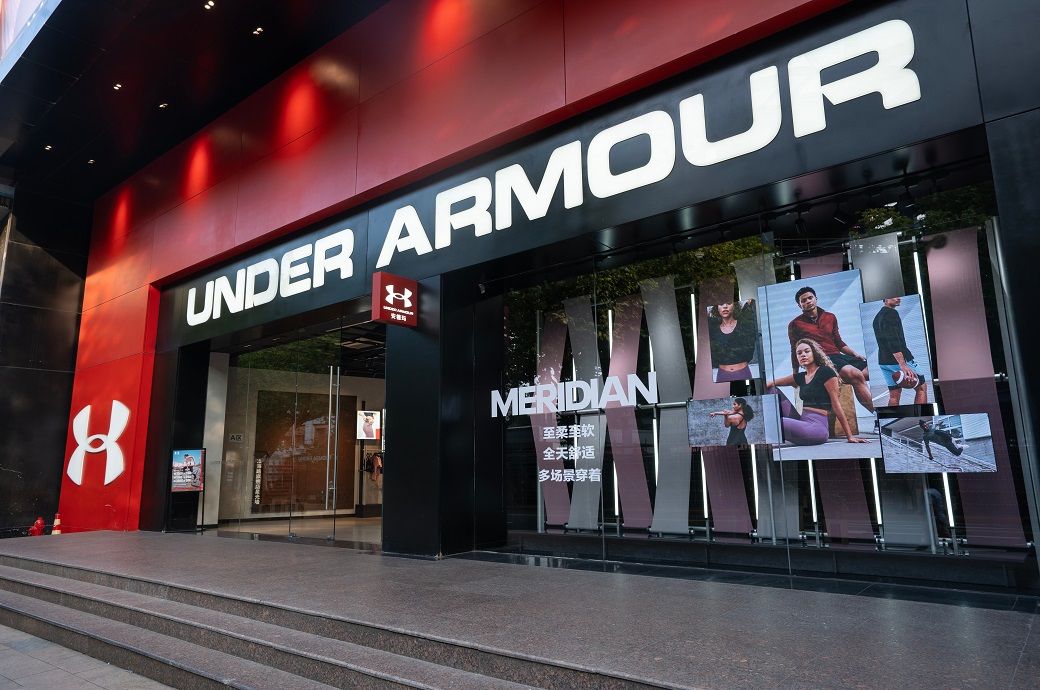
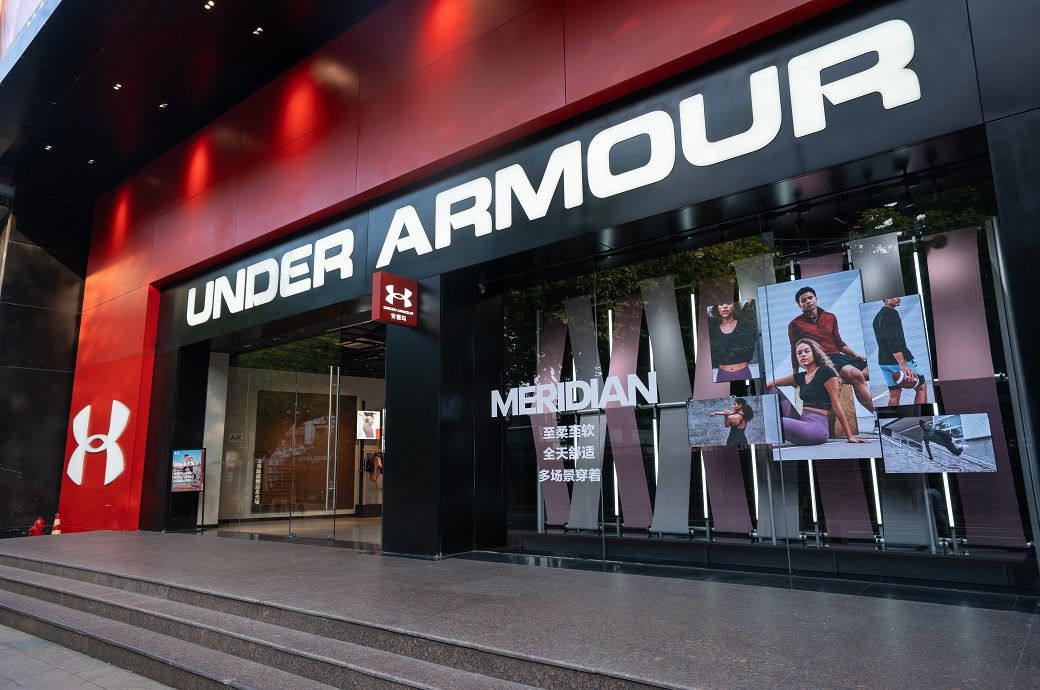
Under Armour has posted a challenging Q3 FY26, with revenue down 5 per cent YoY to $1.33 billion amid tariff pressure and weak North America demand.
International growth partly offset declines.
Margins narrowed, resulting in losses, though liquidity stayed strong.
For FY26, revenue is seen down 4 per cent, with improving profitability supported by restructuring and cost controls.
Channel performance was mixed. Wholesale revenue declined 6 per cent to $660 million, while direct-to-consumer (DTC) revenue fell 4 per cent to $647 million. Within DTC, owned-and-operated store revenue slipped 2 per cent and e-commerce declined 7 per cent, with digital sales accounting for 38 per cent of total DTC revenue during the quarter.
Category-wise, apparel revenue showed relative resilience, declining 3 per cent to $934 million. Footwear remained under pressure, falling 12 per cent to $265 million, while accessories revenue decreased 3 per cent to $108 million.
Profitability was weighed down by external and structural factors. Gross margin declined 310 basis points to 44.4 per cent, primarily due to higher tariffs, alongside pricing headwinds and an unfavourable channel and regional mix. These impacts were partially offset by foreign exchange gains and a more favourable product mix, Under Armour said in a press release.
Selling, general and administrative (SG&A) expenses increased 4 per cent to $665 million. Excluding a $99 million litigation reserve linked to an insurance carrier dispute and $3 million in transformation costs related to the fiscal 2025 restructuring plan, adjusted SG&A declined 7 per cent to $563 million, mainly due to lower marketing spend following timing shifts.
Restructuring charges during the quarter amounted to $75 million. The company reported an operating loss of $150 million, while adjusted operating income stood at $26 million after excluding litigation, restructuring and transformation expenses.
Under Armour posted a net loss of $431 million in Q3, largely driven by a $247 million valuation allowance on US federal deferred tax assets. Adjusted net income was $37 million. Diluted loss per share was $1.01, while adjusted diluted earnings per share came in at $0.09.
Inventory levels improved, declining 2 per cent to $1.1 billion. Liquidity remained strong, with cash and cash equivalents of $465 million at quarter-end. The company also held $600 million in restricted investments earmarked for repayment of senior notes due in June 2026 and had no borrowings under its $1.1 billion revolving credit facility.
Under Armour continued to progress with its FY25 Restructuring Plan, first announced in May 2024, which aims to enhance operational efficiency. The plan is now expected to cost up to $255 million. By the end of Q3 FY26, the company had incurred $224 million in restructuring and transformation costs, with the remaining charges expected to be recognised by the end of fiscal 2026.
“Our third quarter adjusted operating results exceeded expectations, and despite a few unfortunate, non-recurring impacts, we’re encouraged by the progress we’re making in the business to reignite brand momentum,” said Kevin Plank, president and CEO of Under Armour. “In North America, we believe the December quarter marked the most challenging phase of our business reset, and we expect greater stability ahead as we build on this progress globally.”
“Our transformation is accelerating as we sharpen our focus and strengthen execution. Our strategy is gaining traction through better products, bolder storytelling, and a more disciplined market presence, positioning Under Armour to operate with greater intention and confidence going forward,” added Plank.
Looking ahead, Under Armour revised its full FY26 outlook as revenue is expected to decline 4 per cent, compared with the prior outlook of a 4 to 5 per cent decline. This includes an approximate 8 per cent decline in North America and a 6 per cent decline in Asia-Pacific, each compared with a previously expected high-single-digit decline, partially offset by an approximate 9 per cent increase in EMEA revenue, compared with a previously expected high-single-digit increase.
The gross margin is expected to decline approximately 190 basis points, compared with the prior outlook of a 190 to 210 basis point decline, primarily due to higher US tariffs, unfavourable channel and regional mix, and pricing headwinds, partially offset by favourable foreign exchange and product mix, added the release.
SG&A expenses are expected to decline at a low-double-digit rate, compared with the prior outlook of a mid-teen percentage decline. Adjusted SG&A, which excludes litigation reserve expenses, transformation expenses related to the FY25 Restructuring Plan, and impairment charges, is expected to decline at a mid-single-digit rate, unchanged from the prior outlook, driven by lower marketing costs, restructuring savings, and other cost management initiatives.
Operating loss is expected to be approximately $154 million, compared with the prior outlook of a $56 million to $71 million loss. Excluding the litigation reserve expense and expected transformation and restructuring charges, adjusted operating income is expected to be approximately $110 million, compared with the prior outlook of $95 million to $110 million.
Diluted loss per share is expected to range from $1.24 to $1.25. Adjusted diluted earnings per share is expected to range from $0.10 to $0.11, compared with the prior outlook of $0.03 to $0.05.
Fibre2Fashion News Desk (SG)