
The Confederation of Indian Textile Industry (CITI) also welcomed the announcement, highlighting the sharp reduction in US tariffs on Indian goods to 18 per cent. CITI chairman Ashwin Chandran said, “This reduction in tariff will ensure that Indian textile and apparel exporters are once again in a position to compete effectively in the US market, which is the single-largest destination for India’s textile and apparel exports.” He added that the deal would enable factories to operate at higher utilisation levels and support a revival in employment growth.
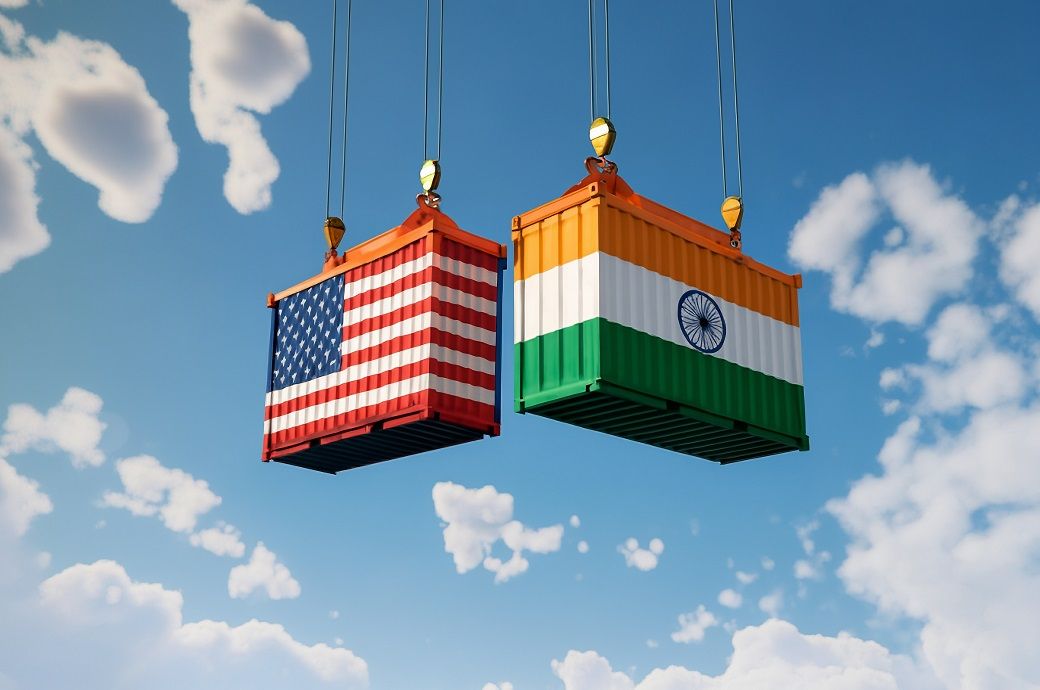
India’s textile and apparel industry has welcomed the India–US trade deal as a turning point for exports, competitiveness and employment.
Industry leaders said the sharp cut in US tariffs to 18 per cent will revive capacity utilisation, attract fresh investments and strengthen India’s position as a global sourcing hub.
The agreement is expected to drive strong export growth and job creation.
Dr A Sakthivel, chairman of the Apparel Export Promotion Council (AEPC), said the agreement comes at a critical time for the apparel industry, which has been under pressure due to the earlier 50 per cent US tariff. “The breakthrough in the India–US trade negotiations is a highly welcome and timely development for the Indian apparel industry. The United States is our single largest export market, and improved trade terms will significantly enhance the competitiveness of Indian apparel products in the US market,” he said.
Dr Sakthivel added that the development is expected to provide a strong boost to apparel exports, attract fresh investments across the value chain and reinforce India’s position as a reliable global sourcing hub. “Most importantly, as one of the largest employment-generating sectors, this positive move will help secure existing jobs and create substantial new employment opportunities, particularly for women and workers in labour-intensive segments,” he said.
Reacting to the agreement, Sanjay K Jain, chairman of the ICC National Textile Committee, described the deal as unprecedented in its scale and immediacy. “The EU was often described as the mother of all trade deals, but this US agreement is the grandmother of all deals, and more importantly, it takes effect immediately,” he said. Jain noted that India’s tariff has come down from 50 per cent to 18 per cent in one move, making it more competitive than neighbouring countries and key textile competitors.
“This places Indian apparel and home textile exports in a never-before-seen golden phase, offering a level playing field or even an advantage over competitors,” Jain said, adding that the industry must now urgently expand capacity to capitalise on the opportunity. “We are not talking about a five or 10 per cent increase. If capacity is built over the next five to six years, garment exports could see high double-digit growth, potentially exceeding 20 per cent,” he added.
Industry leaders also pointed out that India’s unique position of having strong trade relations with major markets, including the US, EU, UK, Russia, the Middle East and Oceania, further strengthens its long-term export outlook.
Fibre2Fashion News Desk (KUL)