
According to a Railway Board circular issued on January 9, the new sleeper version of the Vande Bharat will issue only confirmed tickets. There will be no provision for RAC, waitlisted or partially confirmed tickets. All available berths will be open for booking from the start of the advance reservation period.
Minimum fare for 400 km
Ticket prices for the Vande Bharat Sleeper will be slightly higher than premium trains such as the Rajdhani Express. Passengers will have to pay a minimum fare equivalent to 400 km, even if they travel a shorter distance.
The per-kilometre fare has been fixed at:
- ₹2.4 per km for 3AC
- ₹3.1 per km for 2AC
- ₹3.8 per km for First AC
This means the minimum fare will be:
- ₹960 for 3AC
- ₹1,240 for 2AC
- ₹1,520 for First AC
(GST will be charged separately)
Howrah–Guwahati route fares
For the Howrah–Guwahati route (around 1,000 km), fares will be:
- ₹2,400 (3AC)
- ₹3,100 (2AC)
- ₹3,800 (First AC)
For longer journeys of 2,000 km, fares rise to:
- ₹4,800 (3AC)
- ₹6,200 (2AC)
- ₹7,600 (First AC)
These fares are higher than existing premium trains. For comparison, the Rajdhani Express charges about ₹2.14 per km for 3AC, ₹2.91 for 2AC and ₹3.60 for First AC. On the Howrah–Guwahati route, the Saraighat Express currently charges ₹1,410 (3AC), ₹1,985 (2AC) and ₹3,320 (First AC).
No RAC, but other quotas remain
While RAC is not allowed, the Vande Bharat Sleeper will continue to have quotas for women, senior citizens, Persons with Disabilities (PwDs) and duty pass holders, similar to other long-distance trains.
Faster overnight travel
The first Vande Bharat Sleeper train will be flagged off by Prime Minister Narendra Modi on the Howrah–Guwahati route. The service is expected to cut travel time by around three hours compared to existing express trains.
The overnight train will make 10 stops across seven districts in West Bengal — Howrah, Hooghly, Purba Bardhaman, Murshidabad, Malda, Jalpaiguri and Cooch Behar — and two districts in Assam — Kamrup Metropolitan and Bongaigaon.
Train features and speed
The train will have 16 coaches, including:
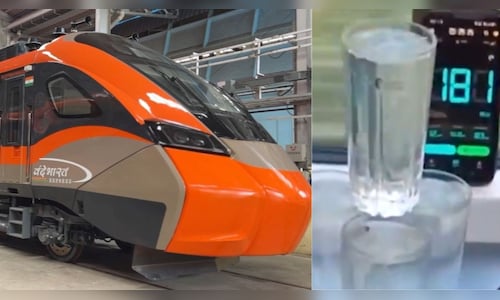
Although the train is capable of running at 180 kmph, it will operate at a maximum speed of 130 kmph for safety reasons. In comparison, Rajdhani Express trains run at an average speed of 80–90 kmph.
Key features include ergonomically designed berths, improved cushioning, automatic doors, quieter coaches, superior suspension, and enhanced ride comfort. The train is equipped with the Kavach automatic train protection system, an emergency talk-back system, advanced driver controls and improved sanitation technology.