
Last Updated:
When a major global firm makes such a big bet, it signals to other investors and the world that India is considered a strategic hub for next-generation technology


In its detailed blog, Microsoft said India stands at a pivotal moment in its AI journey, emerging as a frontier AI nation defined by impact at scale. (AFP)
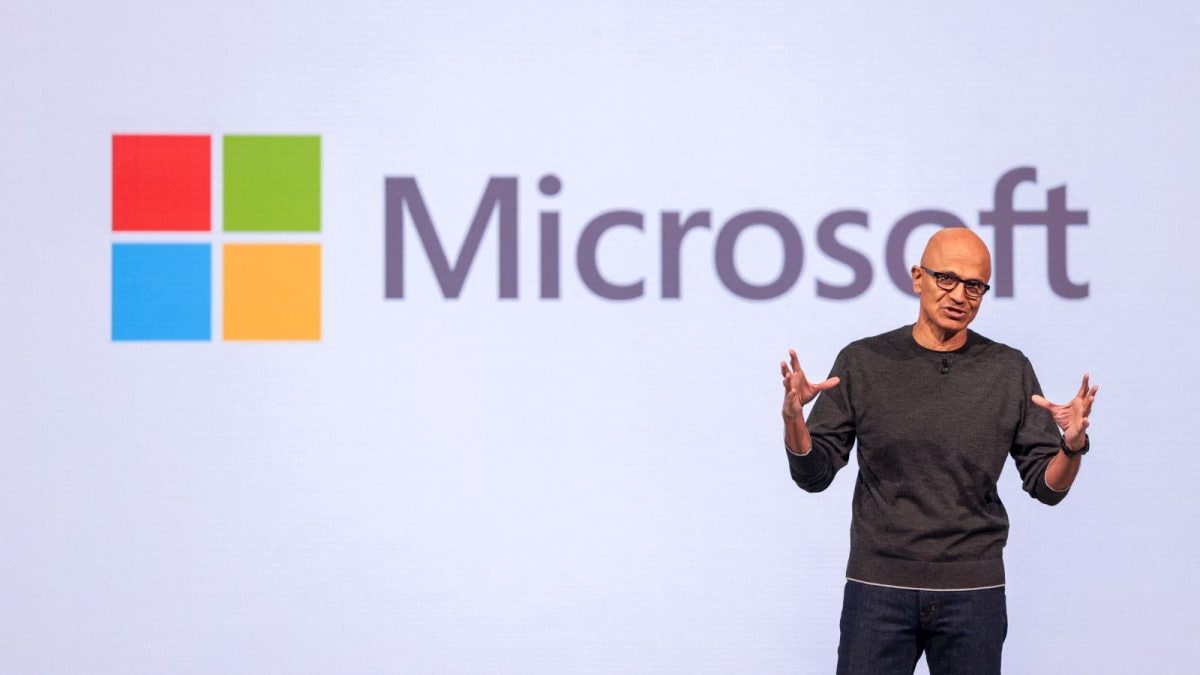
In its largest investment in Asia yet, software giant Microsoft will invest $17.5 billion in India between 2026 and 2029 to give a much-needed fillip to the country’s cloud and artificial intelligence (AI) infrastructure, skilling, and sovereign digital capabilities.
The announcement followed chairman and chief executive officer Satya Nadella’s meeting with Prime Minister Narendra Modi on December 9, ahead of Microsoft’s India AI tour.
In its detailed blog, Microsoft said India stands at a pivotal moment in its AI journey, emerging as a frontier AI nation defined by impact at scale. “Together, Microsoft and India are poised to set new benchmarks and drive the country’s leap from digital public infrastructure to AI public infrastructure in the coming decade,” the company said in the blog.
So, we asked AI what the investment means for India and here’s what we learnt.
Why Does It Matter?
According to ChatGPT, the US$ 17.5 billion commitment is Microsoft’s biggest investment in Asia. The plan includes building “hyperscale” data-centres (including a major one in Hyderabad going live mid-2026), expanding cloud capacity, and strengthening computing infrastructure—critical foundations for AI, cloud services, and digital transformation at national scale.
Apart from this, Microsoft aims to train millions of Indians (doubling an existing commitment) by 2030, helping build a large base of AI-skilled talent across India. The investment is also aligned with the government’s push toward “AI-public infrastructure”, enabling AI integration into public services, social-welfare platforms, employment databases, etc.
The optics of the move are also crucial. When a major global firm makes such a big bet, it signals to other investors and the world that India is considered a strategic hub for next-generation technology, opening the door to more foreign tech investments, job creation, and innovation ecosystem growth.
With a huge and growing digital population, plus a vast pool of developers, engineers, and tech-savvy youth, India offers a high-impact market for AI products, making such investments more viable and far-reaching.
Google’s Gemini says the major portion of the funds will go toward the new “India South Central” cloud region in Hyderabad, set to go live in mid-2026. The single region will be massive (roughly the size of two Eden Gardens stadiums) and will be supported by expansions in Pune, Mumbai, and Chennai. This ensures that Indian businesses have low-latency access to the massive computing power required for AI, without relying on servers abroad.
What this also means is data security. A key part of the deal is “sovereignty”, meaning sensitive Indian data (government, financial, healthcare) can be processed and stored entirely within Indian borders. According to Gemini, by late 2025, Microsoft 365 Copilot (their flagship AI tool) will process data locally in India, thereby addressing the Indian government’s strict growing requirements for data privacy and national security.
As per Grok, there is also a geopolitical advantage as the move strengthens US-India tech ties amid tensions with China, helping India diversify supply chains and reduce dependency on Chinese hardware for AI. Nadella emphasised this during his meeting with PM Modi, framing it as building “infrastructure, skills, and sovereign capabilities” for an AI-first future.
What Do Microsoft & Alphabet Investments Together Mean For India?
Apart from Microsoft’s push, Google’s parent company Alphabet has decided to invest $15 billion to build an AI data hub in Andhra Pradesh’s port city of Visakhapatnam. The hub will be part of Google’s global network of AI centres spread across 12 countries.
ChatGPT says the move shows India is fast becoming a central node in the global AI infrastructure network. This may attract more global firms, start-ups, and innovation to baseline operations in India. Sectors like healthcare, agriculture, education, governance, fintech, etc can more easily adopt AI tools, improving efficiency, outreach, and innovation across the economy and public services.
In a country with a vast population, combining corporate investments with government push could lead to millions of jobs—not just in software engineering, but data-labelling, AI operations, infrastructure maintenance, local support, product development. Over time, this could help reduce brain-drain and encourage domestic innovation.
Gemini says the move shows India’s transition from ‘Digital Public Infrastructure’ to ‘AI Public Infrastructure’, where instead of just payments and identity, the new infrastructure will support AI-driven healthcare diagnostics, vernacular language translation for government services, and automated agriculture advisories at a population scale.
The country can also become an AI ‘proving ground’. Both Google and Microsoft are using India to test their most advanced AI deployments because if an AI model can work for India’s linguistic diversity and scale (1.4 billion people), it can work anywhere. As Microsoft and Google fight for dominance here, Indian start-ups and enterprises benefit from price wars, better tools, and more aggressive support programmes.
Grok agrees. India is emerging as the preferred alternative to China for global AI expansion, with US firms betting on its English-speaking talent pool, democratic stability, and pro-business reforms like data localisation laws. What this means is intensified competition (example free AI tool access to hook users early), a surge in start-ups (India already has 100+ AI unicorns), and policy wins for the government, such as faster approvals for foreign data centers.
Challenges Ahead
ChatGPT warns that building and running hyperscale data-centres at national scale involves massive capital, power, cooling, and skilled manpower, with delays or mis-management could limit impact. The benefits may concentrate in urban/tech cities initially and ensuring equitable access across tier-2/3 cities and rural India will be crucial for inclusive impact. Apart from this, as AI becomes pervasive, issues around data security, user privacy, algorithmic bias, and regulatory oversight will become more urgent.
While capital is pouring in, global AI competition is intense and firms need to ensure long-term value, not just hype.
 Click here to add News18 as your preferred news source on Google.
 December 10, 2025, 09:20 IST
Read More